

Feel the fear and do it anyway!
May 24, 2026
This week I held the in person launch evening for my book.
I asked everyone in the room one question: “What’s one piece of advice you wish you’d heard earlier in your career?”
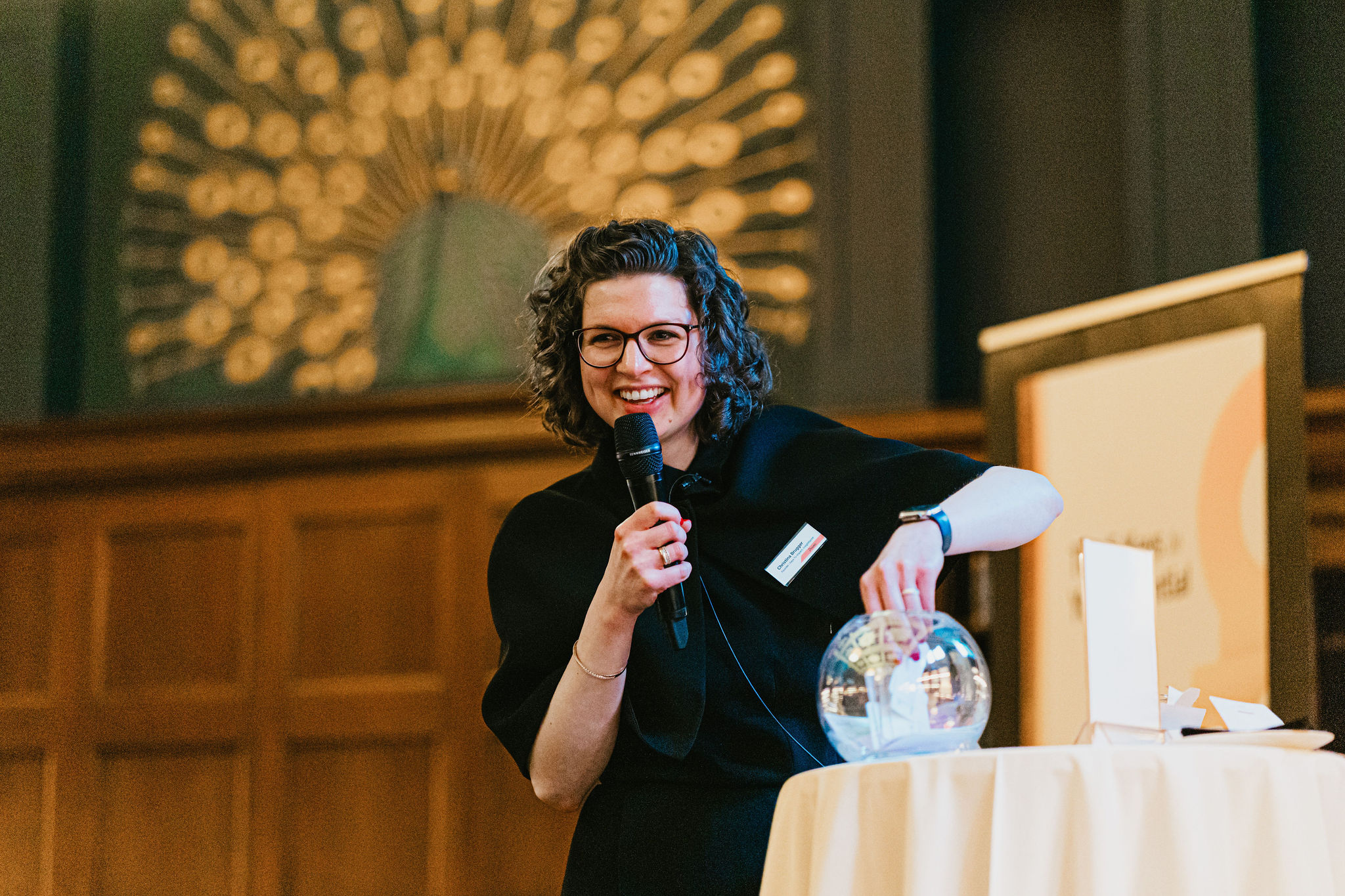
We collected all the answers in a jar. (That’s me with the jar, here.)
Over the coming weeks I want to share some of that advice with you. Not just the words, but what they really mean and how you can use them.
Here’s the first one.
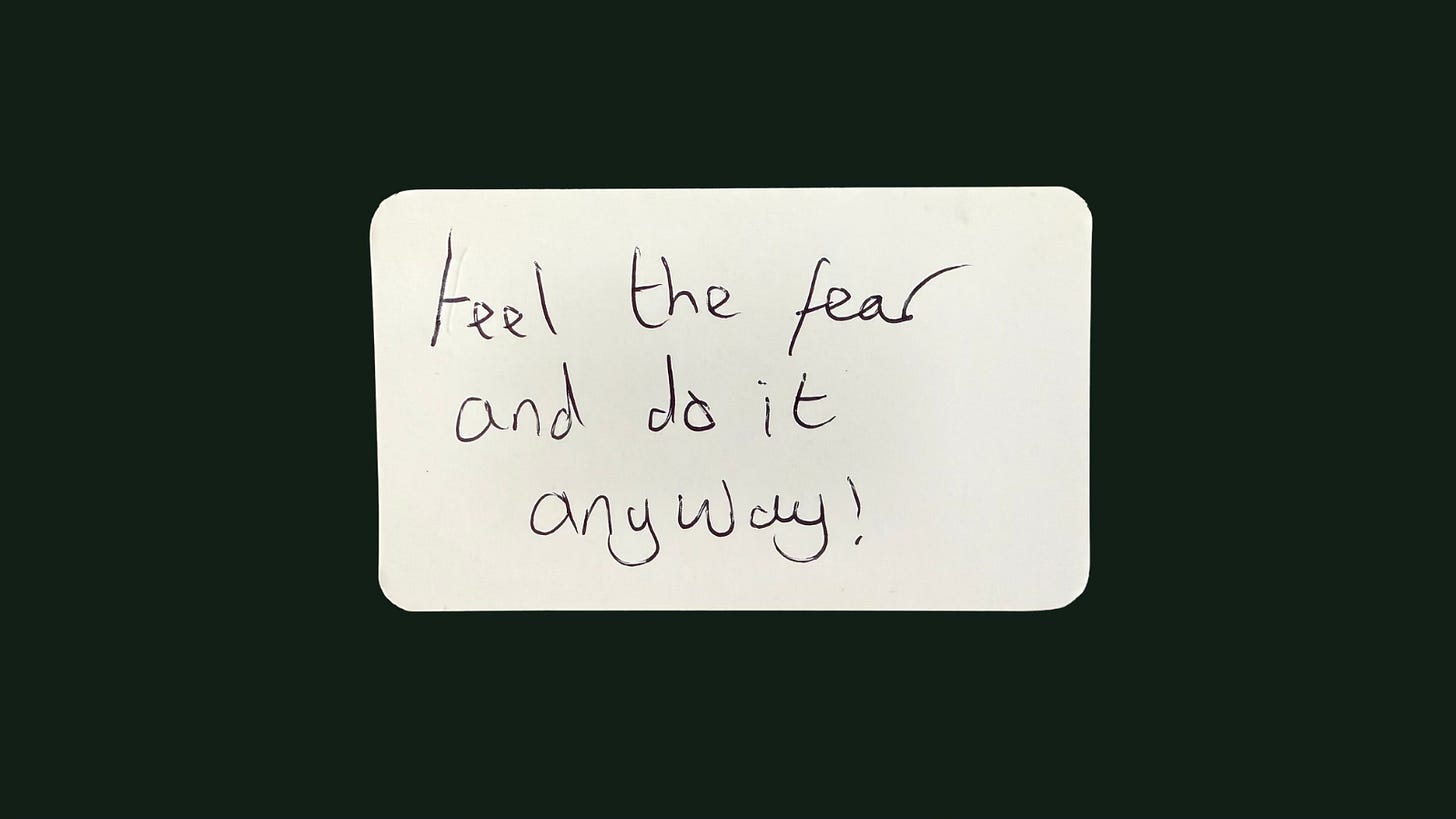
“Feel the fear and do it anyway”
You may have come across this before. There was even a book with that title back in 1987. And it’s such powerful advice.
Why did I choose this one to start with? Because I felt it myself, very recently.
Publishing a book and standing up at my own launch party made me feel uneasy. How would the book land? Would people resonate with the message?
I felt the fear - and I did it anyway.
Why fear is quietly holding your career back
Fear is one of the biggest reasons we don’t move forward at work.
You’ve probably noticed this: women tend to apply for a role only when they meet almost every requirement on the list, while men will often go for it far sooner.
Why the difference? Some of it is wired into the body. We tend to feel losses more strongly and react faster to potential threats - an old evolutionary instinct from protecting our children. (Research studies linked at the bottom)
So this topic of fear is highly important.
Let’s get under the skin of this advice. It comes in two parts, and both matter.
Part 1: First, feel the fear
This part gives you permission. It’s telling you that being afraid is normal.
Fear is a basic human experience - it comes from evolution. Long ago, it kept us alive by warning us of danger and releasing adrenaline so we could fight or run.
Back then the danger was real: for example, a predator, or being cast out of your group, which left you unprotected and alone.
Today those life-or-death threats are mostly gone. You could survive on your own, and there’s no predator waiting outside your meeting room.
That’s exactly why so many of us feel like a failure for being scared of something. You think: “I know I’m not in danger, so why do I care so much what the group thinks? Maybe I’m just not made to do this.”
You are made for this - the fear is not a flaw. Your brain switches it on automatically, for everyone. Learning to work with it takes time, and honestly, no one ever becomes completely fearless. That isn’t the goal.
Some people deal with fear by running from it. It’s uncomfortable, and they hate the racing heart and the sweaty palms that come with it.
The problem is, if you avoid everything that scares you, you also avoid the things that matter most. Speaking in front of a room, for example. To your nervous system, a row of senior faces can feel a little like that ancient pack of predators. However, there’s no real danger. And once you learn to present well, it can move your career forward faster than almost anything else.
If you’re not willing to feel a bit of fear, you stay in your comfort zone. And the comfort zone is where careers growth stops.
Part 2: Now do it anyway
The second part is about action: the doing.
Avoiding the scary thing doesn’t make the fear get smaller - it makes it grow, and it turns into anxiety about something that might not even happen.
Let me show you how that snowballs.
Say you’re nervous about presenting. So you don’t put your hand up for the interesting project, because it might end with you presenting to senior stakeholders. Then you sit through the all-hands barely listening, tense the whole time, in case your manager turns to you for a one-minute update. The fear has now cost you a project and an hour of your attention, over something that never even happened.
And every time you avoid these situations, you teach your brain the same lesson: “I felt better because I escaped.”
Doing it anyway breaks that loop.
When you actually face the thing, you learn it wasn’t as bad as you feared. You get the adrenaline spike, and then it settles. Your brain quietly registers that nothing terrible happened. Do that enough times and the situation starts to bore your brain.
The good news: you don’t have to do it all at once
You can do this in small steps.
This is the idea behind exposure therapy. You start with something only slightly scary, get comfortable, then take the next step up.
Here’s how it works for someone afraid of dogs:
-
Look at photos and videos of dogs
-
Watch a dog from a distance, or through a window
-
Stand a few feet from a dog on a lead
-
Pet the dog
How can you apply this to work situations
Your ladder for speaking and presenting
The goal: being able to present at the all-hands.
-
Help someone else with their talk. Sit at the side of the stage, or walk up to fix the slides. Just get used to being looked at.
-
Give a short update in your own team meeting. You’re speaking in front of a few people, but you can stay seated.
-
Give an update to senior leaders. The stakes are higher, but it’s a small group and you can sit with them.
-
Present a single slide at the all-hands, or read out the agenda. A big audience now, but very simple content.
-
Give a full presentation at the all-hands. This is what you were working towards.
Your ladder for going after a bigger role
-
Watch people already in those roles. Talk to them and find out what the job actually involves.
-
Take on small tasks that stretch you, ones where you don’t know the answer upfront. You’re proving to yourself that you’re someone who can figure things out.
-
Have a conversation with your manager about your next step and ask for their advice. You’re not asking for the role yet, but you’re getting your brain used to the idea.
-
Apply for a role you’re not too attached to, just for the practice.
-
Apply for the one you really want.
How to build your own ladder for anything
Whatever you’re afraid of, the pattern is the same:
-
Watch someone else do it
-
Find the smallest first step you can take
-
Raise the stakes on that step
-
Keep raising the difficulty until you reach the thing you were aiming for
Once you see the pattern, you’ll start to notice the moments it applies to:
-
You’re asked to present to the Board, and your instinct is to ask your manager to do it for you.
-
Someone invites you to give a keynote, and your instinct is to say no.
-
You’re offered a big step-up role, and your instinct says it’s too risky.
-
You disagree with your boss and want to say so clearly, but you’d rather keep the peace and stay quiet this once.
Every one of these has the same thing in common: they all sit just outside your comfort zone.
Feeling scared is the sign you’re growing
So remember this: The fear isn’t telling you to stop - instead, you’ve stepped past the edge of your comfort zone, which is exactly where growth happens.
Was publishing the book and standing up at that launch scary? For sure. But it was worth every nervous moment. Hearing from my beta readers how much the tools have helped them speak up and feel more confident at work made all of it worthwhile.
So pick one thing this week that scares you a little. Find the first small step on the ladder and take it.
P.S. Want to know more about the book, including why I wrote it? Click here for the book website.
P.P.S: The research studies I mentioned: Women feel losses more strongly. And women detect potential threats differently.